
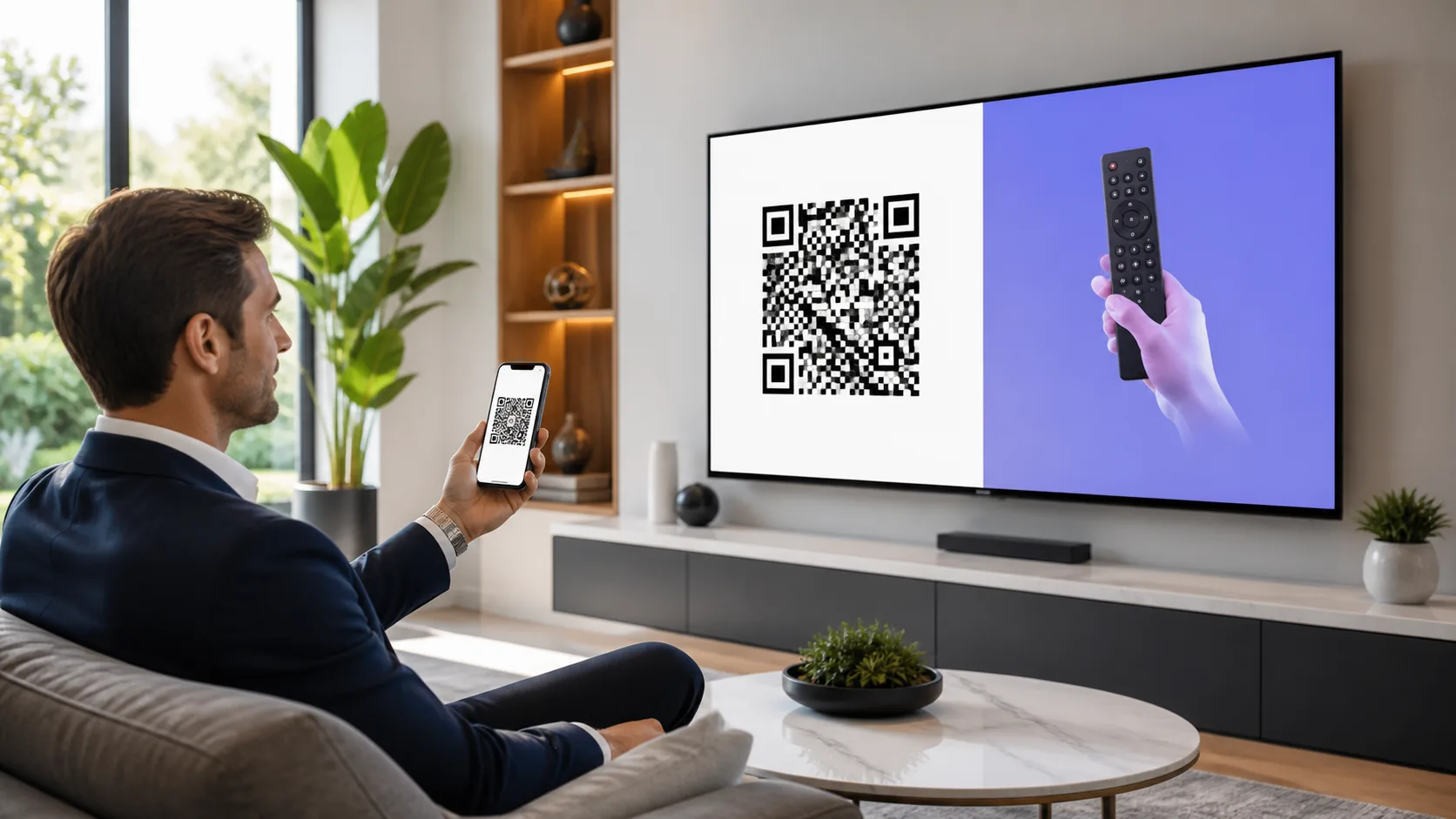
Connected TV ads can hold attention, but attention does not always turn into action. When viewers need to grab a phone, point a camera at the TV, and hope a QR code works, the moment can slip away. We believe the better approach is to make the next step feel as natural as the ad itself.
An in-hand call to action for TV ads gives viewers a way to respond on the device already in their hands, without pulling focus from the streaming experience. By pairing the biggest screen with phones and tablets, streaming platforms can create a more connected path from interest to interaction.
Turn Connected TV Attention Into Instant Action
Streaming viewers are used to having more than one screen nearby. A TV may be playing premium content while a phone or tablet is used for searching, shopping, sharing, or looking up details. That second screen does not have to compete with the TV. It can support what is happening on it.
QR codes were designed to bridge that gap, but they place the work on the viewer. An in-hand call to action for TV ads takes a different path. Instead of asking someone to scan a code from across the room, it can present a relevant prompt directly on their personal device while the ad is playing.
Shared sound helps make that connection feel intentional. With synchronized sound across the TV, phones, tablets, and supported speakers, we can help streaming platforms bring screens together without asking viewers to purchase new hardware. The result can feel less like a separate mobile task and more like one coordinated streaming moment.
Why QR Codes Create Friction on the Biggest Screen
A QR code looks simple on paper: point, scan, tap, and go. In a living room, the experience can be less simple. The viewer may be sitting far from the TV, the room may be dim, or the code may only appear for a brief moment. Their phone camera may not be open, and some people may hesitate before scanning an unfamiliar code.
That small pause matters. An ad has only a short window to keep attention, and every extra step asks the viewer to break away from the content. Instead of staying immersed in the show, they are trying to line up a camera and decide whether the scan is worth their time.
QR codes can also make measurement less clear. A scan can show interest, but it does not always show what happened next. Did the viewer open the page, explore a product, save an offer, or leave right away? When the action path becomes scattered, it is harder for platforms and advertisers to understand what created real engagement.
We see QR codes as useful for simple awareness moments, especially when the goal is to share a general destination. They can be less helpful when a campaign needs immediate interaction, commerce activity, or a clearer view of how viewers responded.
How an in-Hand Call to Action for TV Ads Works
An in-hand call to action for TV ads is a prompt sent to a viewer’s phone or tablet while a Connected TV ad is playing. Rather than asking the viewer to scan the TV screen, the experience meets them on a device where they can act right away.
The action can be tailored to the campaign and the viewer’s point in the experience. For example, a prompt may allow someone to:
- Open a product page while the ad is still on screen
- Save a limited-time offer for later
- Add an item to a cart
- Request more information
- Explore an interactive brand experience
The key is coordination. A phone prompt that appears at the wrong time can feel random or intrusive. A synchronized prompt that matches the message, sound, and timing on TV can feel like a natural extension of the ad.
Our AiFi software-only SDK is built around shared sound for streaming. It can synchronize compatible phones, tablets, speakers, and TV audio, helping platforms create a connected experience across the screens viewers already use. That shared sound layer can give an in-hand interaction better timing and a stronger sense of context.
Compare Engagement, Attribution, and Conversion Paths
The difference between QR codes and direct device engagement is easiest to see in the viewer’s path. With a QR code, the viewer must notice it, unlock a phone, open a camera, scan the code, wait for a page, and then choose whether to continue. Each step can create a drop-off point.
With an in-hand experience, the path can be shorter. The viewer sees the TV ad, receives a related prompt on their phone or tablet, and chooses whether to engage. That does not guarantee a conversion, but it can make the response easier to understand and measure.
When we help platforms think through these experiences, we recommend looking beyond one number. Useful signals can include:
- Engagement with the in-hand prompt
- Click-throughs to product or offer pages
- Time spent exploring
- Offer saves and cart activity
- Completed conversions and repeat interactions
A QR scan is one signal, but it is only the beginning. Direct device engagement can create a fuller picture of what happened after the ad appeared. That clearer feedback can help advertisers refine creative, timing, offers, and audience segments over time.
Build Shared Sound Into the Connected TV Journey
Shared sound is not only about what viewers hear. It can also shape how they experience the relationship between the TV and their personal devices. When audio is synchronized across screens and supported speakers, a streaming moment can feel more cohesive.
For advertisers, that coordination creates room for more thoughtful interaction. The TV can carry the main story, while the phone or tablet can hold details, choices, and commerce actions. Neither screen has to do all the work.
Through our AiFi software-only SDK, we support streaming platforms that want to synchronize audio across phones, tablets, speakers, and TV audio without requiring new hardware. That flexibility matters because connected experiences work best when they fit into the devices viewers already own.
A synchronized approach can support attention by making the experience feel connected. It can support interaction by aligning an in-hand prompt with the on-screen message. It can also support brand recall and commerce opportunities by making it easier for viewers to respond while the message is still fresh.
Plan Holiday Campaigns Around in-Hand Actions
As Q4 planning begins, streaming platforms and advertisers often prepare for major retail moments, seasonal promotions, and higher shopping interest. This is a good time to consider where a QR code is enough and where a direct in-hand experience may create a smoother response.
Holiday campaigns often move quickly, which makes timing especially important. An in-hand call to action can fit naturally with limited-time offers, gift guides, product drops, subscription promotions, and follow-up experiences that reflect a viewer’s interest.
Before peak campaign periods, we recommend testing QR codes and in-hand experiences side by side. Keep the audience segments clear, give each approach a defined purpose, and measure what happens after the first interaction. A QR code may still earn attention, while a direct device prompt may be better suited to deeper product exploration or an immediate offer.
Viewers should not have to choose between enjoying their show and responding to an ad. The strongest Connected TV experiences make the next action feel simple, well-timed, and connected to what is already happening on screen.
Make Shared Sound Part of the Response
At Sound Dimension, we help streaming experiences connect on-screen moments with audio that reaches viewers wherever they are in the room. Learn how an in-hand call to action for TV ads can create a more accessible path from attention to response. Ready to discuss your Connected TV strategy? Contact us to speak with our team.